- my porsche0select your porscheYear
- All
- 2026
- 2025
- 2024
- 2023
- 2022
- 2021
- 2020
- 2019
- 2018
- 2017
- 2016
- 2015
- 2014
- 2013
- 2012
- 2011
- 2010
- 2009
- 2008
- 2007
- 2006
- 2005
- 2004
- 2003
- 2002
- 2001
- 2000
- 1993
- 1992
- 1991
- 1990
- 1989
Model- 911 R - 991
- 911 GT3 RS 4.0 - 997.2
- 911 GT3 RS - 991
- 911 GT3 RS - 997.2
- 911 GT3 RS - 997
- 911 GT3 - 991.2
- 911 GT3 - 991
- 911 GT3 - 997.2
- 911 GT3 - 997
- 911 GT3 - 996
- 911 GT3 RS - 991.2
- 911 GT3 - 992
- 911 GT3 - 992.2
- 911 GT3 RS - 992
- 911 GT2 RS - 997.2
- 911 GT2 - 997
- 911 GT2 - 996
- 911 Turbo / S - 991.2
- 911 Turbo / S - 991
- 911 Turbo / S - 997.2
- 911 Turbo - 997
- 911 Turbo - 996
- 911 GT2 RS - 991.2
- 911 Turbo / S - 992
- 911 Carrera GTS - 991.2
- 911 Carrera S - 991.2
- 911 Carrera - 991.2
- 911 Carrera GTS - 991
- 911 Carrera S - 991
- 911 Carrera - 991
- 911 Carrera GTS - 997.2
- 911 Carrera - 997.2
- 911 Carrera - 997
- 911 Carrera GTS - 992
- 911 Carrera - 996
- 911 Carrera / S / 4S - 997.2
- 911 Carrera / S - 992
- 911 Carrera 4/4S - 992
- 911 Carrera / S / T - 992.2
- 911 Carrera 4/4S - 992.2
- 911 Carrera GTS Hybrid - 992.2
- Boxster - 986
- Cayman / Boxster - 718
- Cayman GT4 - 981
- Cayman / Boxster - 981
- Boxster Spyder - 981
- Cayman / Boxster - 987.2
- Cayman / Boxster - 987
- Boxster - 987
- Cayman GT4 / Boxster Spyder / GT4RS - 718
- Cayenne - 958
- Cayenne - 957
- Cayenne - 955
- Panamera - 970
- Panamera - 971
- Macan - 95B
- Macan - 95B.2
- Macan - 95B.3
- Cayenne - 9Y0E3
- 911 (964) - 964
- Car Not Listed?
Gomy porsche0Save my car - ProductsOpen
- ProjectsOpen
- ResourcesOpen
- MediaOpen
- InfoOpen
Your Cart
Your cart is empty
X
2004 SharkWerks 3.9L 996 GT3 Project: HRE R40 Wheels
Christmas came a little early as last month SharkWerks picked up another shop car project. I've actually been hankering for a 996 GT3 for a while. There's something to be said for the rawness of the car and lack of electronic nannies. It's going to make for a very fun project and we've already mapped things out....
Say hello: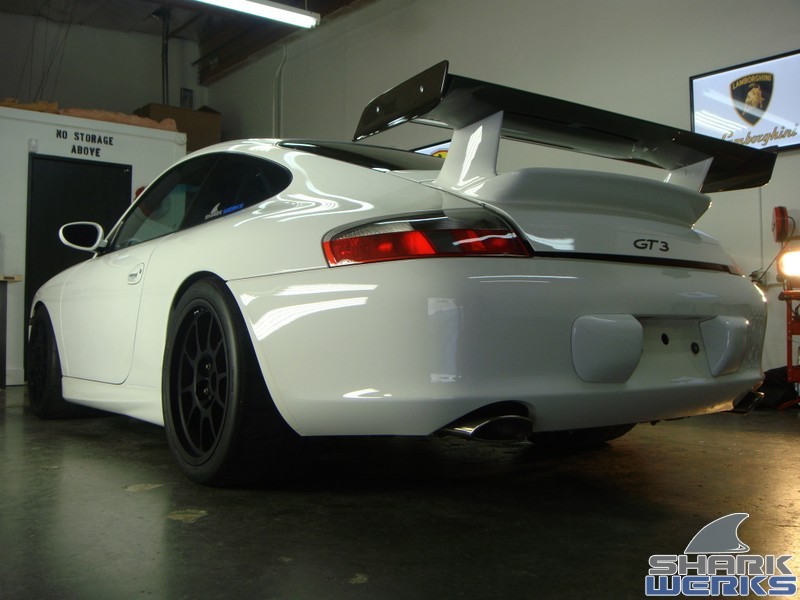
As you can see she's got the European RS tail. No it doesn't really save any weight but what the heck eh?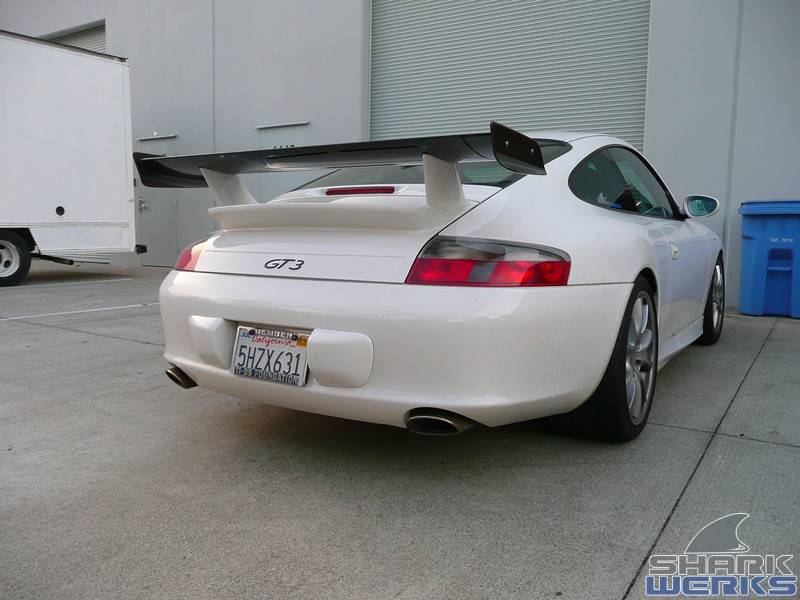
With GT3 seats going in and a welded-in roll bar from Tony/TCDesign we'll be safe and sound. You can't really see much of the roll bar from here but when the interior comes out I'll shoot some better pictures for you. It's honestly far nicer (not to mention more rigid) than the factory Tequipment set up.
The first order of business was to figure out the exhaust. The stock sound is a little drab compared to a 7GT3. Dropping the side mufflers and throwing on a straight pipe doesn't really give you the best sound IMHO even if it saves weight so that was a non-starter for us. We've always liked the sounds we've made on the 7GT3s with our bypass and our track exhaust. The trouble is that the headers, cats and mufflers on the 6GT3 are completely different from the 7GT3 in terms of design, route and fitment.
So off with that bumper: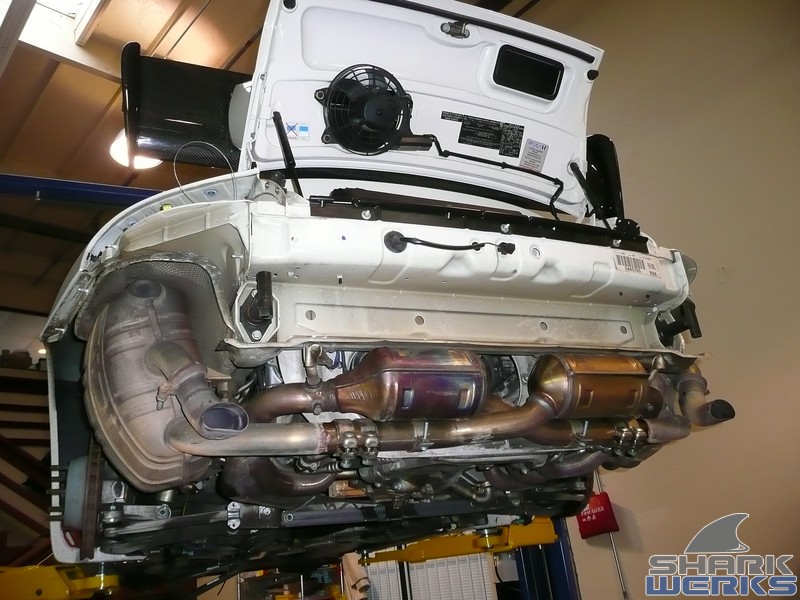
Here's the factory headers, cats and mufflers (and heat shields).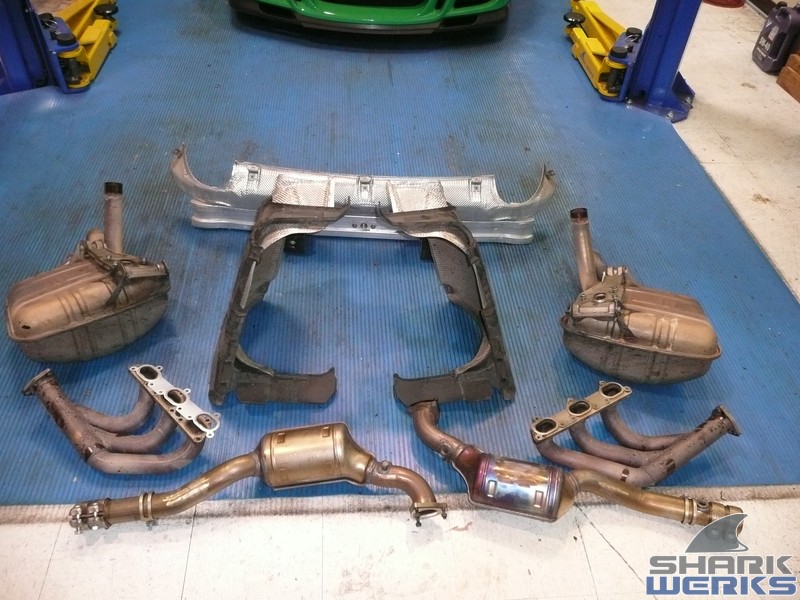
Let's get a weight check. 14.1 pounds for the cats (X2):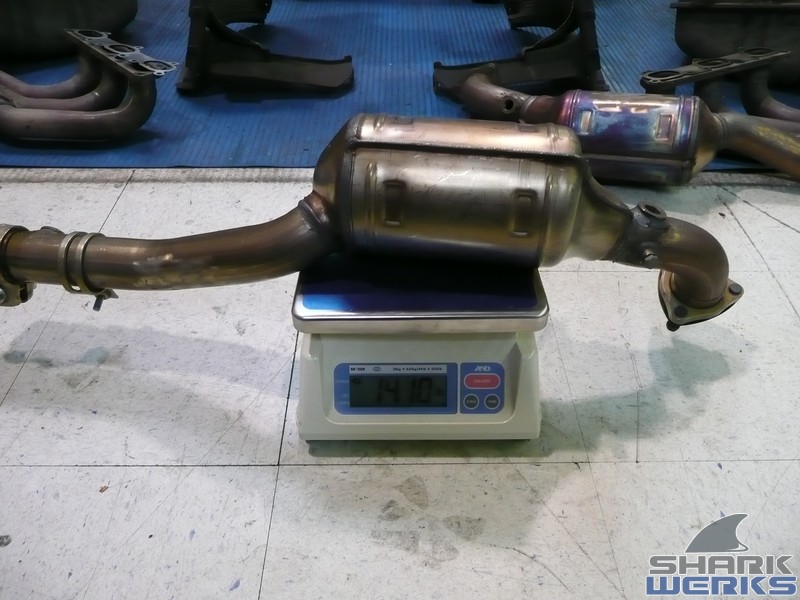
Then there's the headers coming in at 7.34 pounds (X2):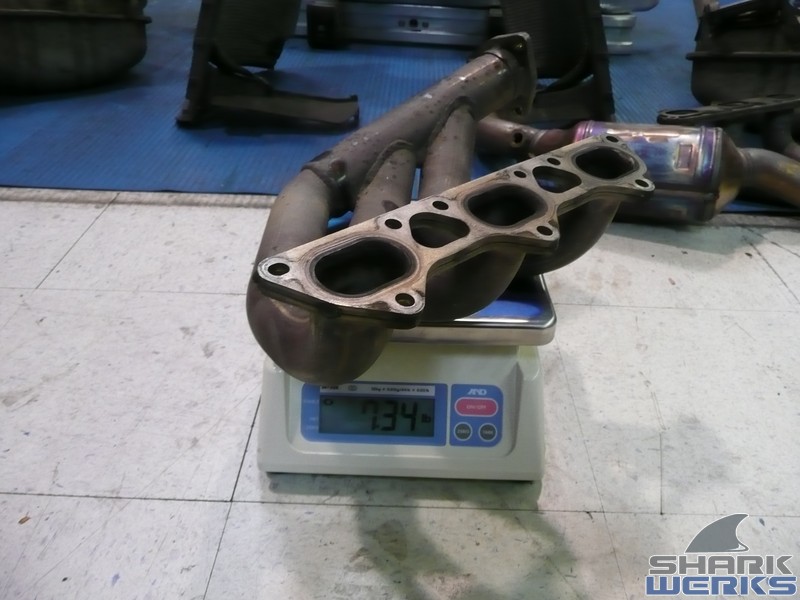
Then in step the side mufflers weighing in at 23.34 pounds (X2):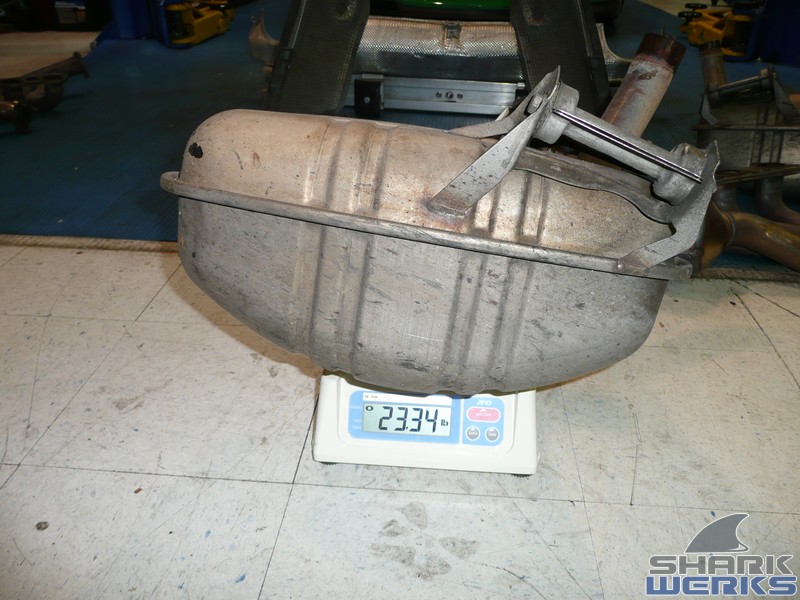
That's a total of ~ 90 pounds there on the bum of the car.
I think you can see where I'm going with this... The 30hp power increase from the 6GT3 to 7GT3 can be attributed to a few key areas- higher compression as well as some to the better exhaust/header flow/design and tuning. I'm a big fan of the 997GT3 design as is Porsche Motorsports. Check out the 997 GT3 cup cars and you'll see the very same headers etc... and a cup exhaust not too different from ours. The headers and cats are also combined into one unit and flow a shorter distance saving weight too. So here's what we're putting back on the car in place of that 90 pound stock set up.
The 7GT3 header cat weighs in at 11.28 pounds (X2).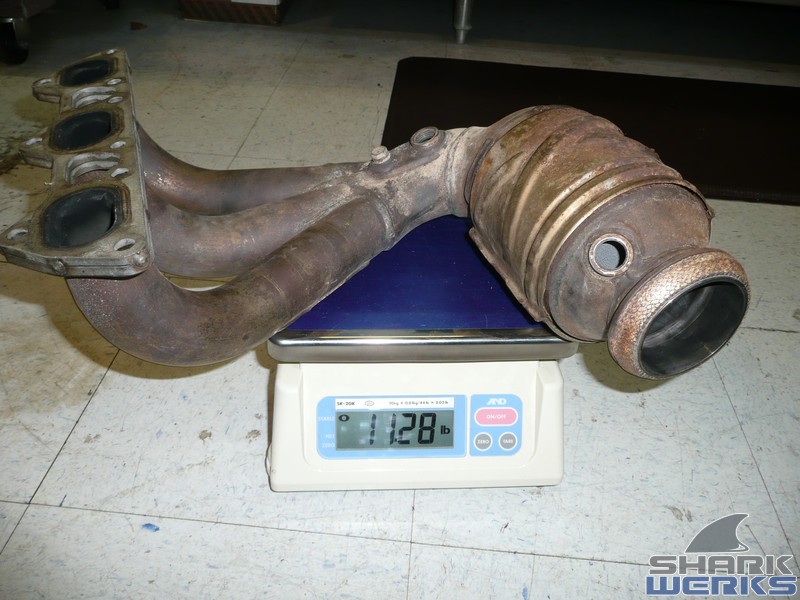
So factor the new headers cats (22.56 pounds) in combination with our Track Exhaust (11 pounds) and we now have a little less junk in our 6's trunk. Total weight = 33.56 pounds and a saving of ~56.44
Installing the 997GT3 header/cat combo... Obviously we're dealing with the same motor (and ports etc...) here so fitment to the engine isn't an issue. The hangers for the stock side mufflers do intrude a bit on the placement of the 02 bungs on the 7GT3 header/cat so we will be removing those as well. If I remember correctly each of those brackets (and there's one on each side) is around 2 pounds for those counting.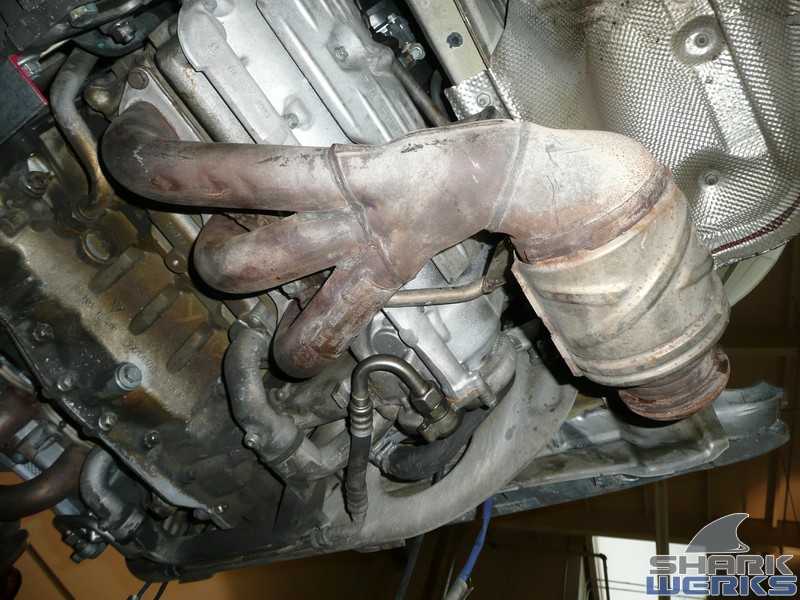
You can see the interference in the shot below. Since we're not utilizing the side mufflers we won't be needing those brackets/hangers: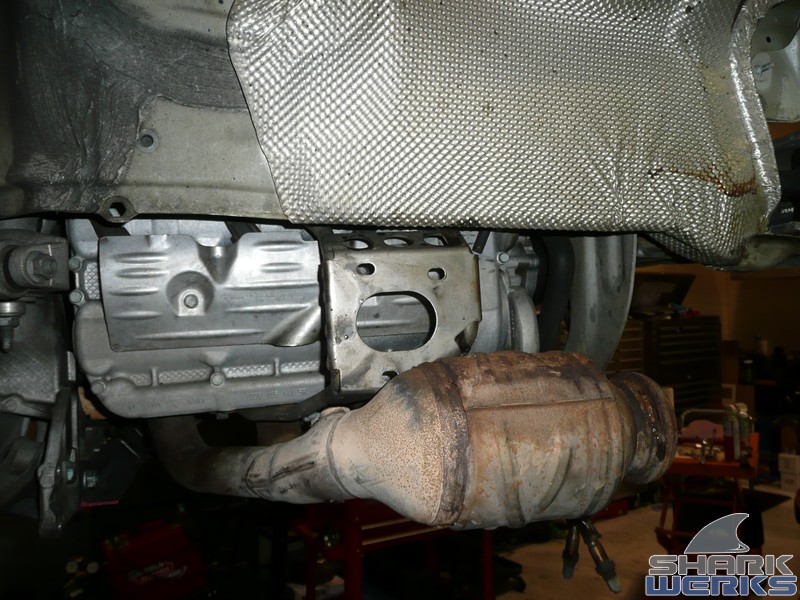
On goes ze SharkWerks Track Exhaust: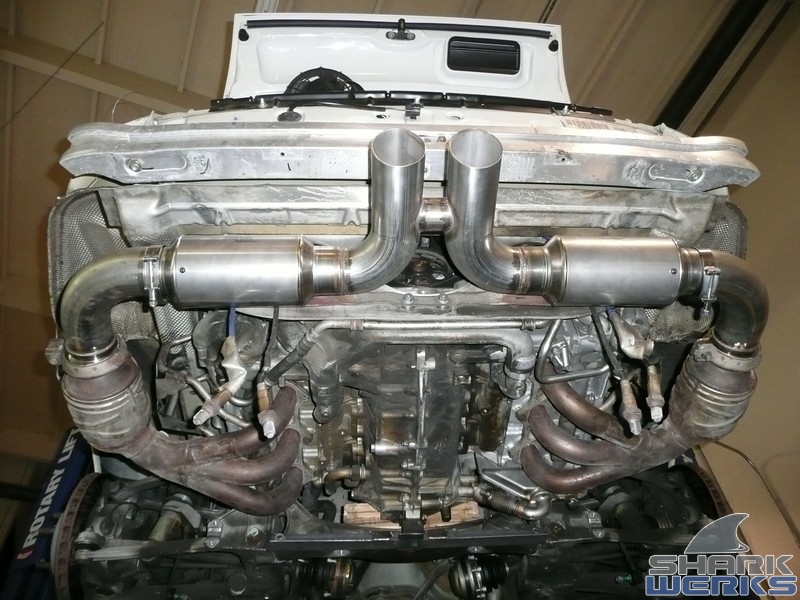
Obviously we can't put back the original bumper. But to be honest it's really nothing more than a stock 996 C2 bumper with the same oval cut outs on either side so in comes a rear cup bumper with the center cut out. Notice NO MORE bumperettes...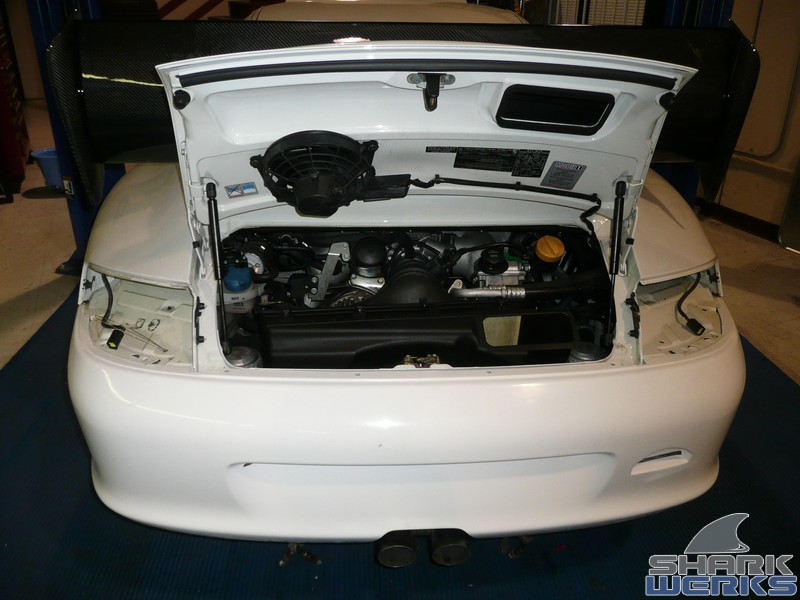
Before sending it out for paint we did a quick test fit. There are a few things that the cup bumpers don't have that need to be cut... For example the 5mph bumper (which we are still going to use) needs to be modified as does a slit made for the license plate light (we made an LED unit).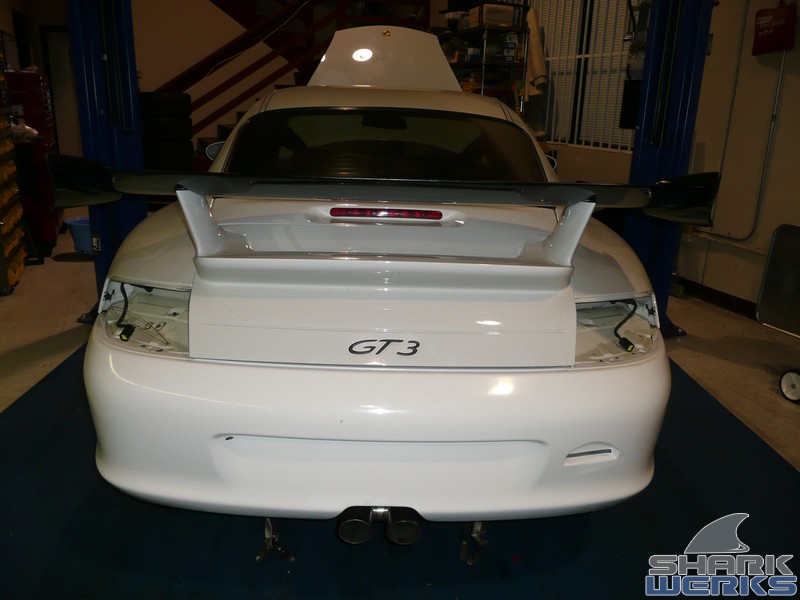
The end result should sound similar to this:
There's a LOT more going on with this car and in the coming weeks... but I figure I'd give you this update for now;)